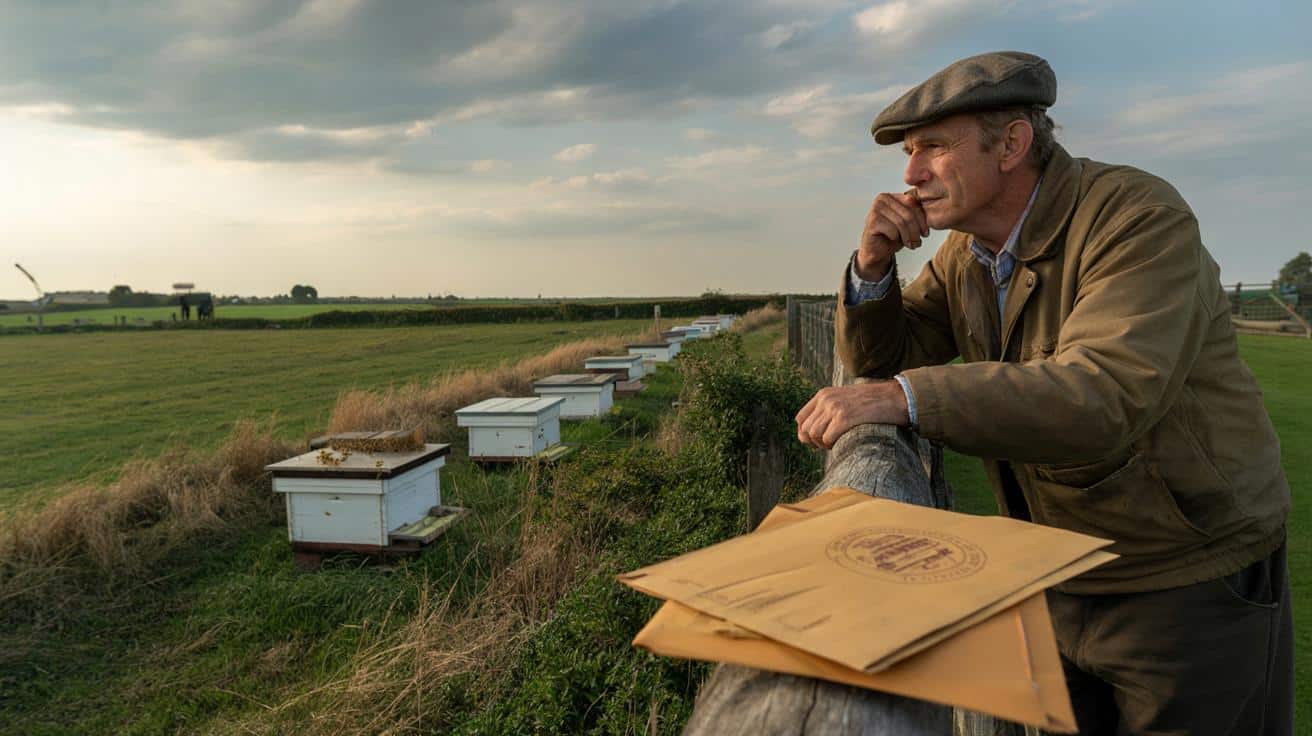
On the edge of a wind‑battered field in rural England, a beekeeper leans on a fence post and watches his hives shimmer in the cold light. He’s not thinking about honey, or blossom, or the first drones of spring. He’s thinking about a brown envelope from the council that landed on his kitchen table last week and quietly detonated his sense of what “helping out” means.
He thought he was doing a favour: hosting a few hives, letting the bees work his hedgerows, accepting jars of honey instead of rent. The letter calls it something else. “Chargeable income‑producing use of land.”
That single phrase is turning a friendly deal between neighbours into a line item on the tax roll. And the strangest part is how the law manages to twist a good deed into taxable profit.
The day “helping a beekeeper” became a business
The story usually starts the same way: a patch of rough grass, a smallholder who hates to see land wasted, and a local beekeeper looking for a safe place to set up hives. The handshake is informal. No rent, just pollination and maybe a honey jar at Christmas. It smells of hedgerows, woodsmoke and good intentions.
Then, a few years later, someone from the valuation office notices a small cluster of white boxes on satellite imagery. A form is sent. Questions follow. The language shifts. All of a sudden, that quiet corner of the field is no longer “just helping a friend”. It’s a **non‑agricultural use with economic benefit**.
Take the case many rural forums are still arguing about: a landowner who let a local beekeeper keep around 20 hives on the edge of his pasture. No written contract, no money, only the understanding that bees would help the clover and the beekeeper would keep an eye on the boundary.
When the council reassessed the property, those hives triggered a reclassification of that strip of land. The presence of a commercial activity, even tiny, even seasonal, became a hook for extra business rates and a change in land tax calculations. The landowner argued it was neighbourliness. The paperwork said it was *income potential*. The numbers on his bill quietly doubled for that parcel.
Behind this lies a definition that feels almost absurd outside a tax manual. For many tax authorities, using land in a way that enables someone else to generate income – even if you don’t get a penny – can count as an “income‑producing use”. That phrase doesn’t ask whether cash changed hands. It asks whether the land is part of an income chain.
So a beekeeper selling honey at markets, using your back field, effectively drags your patch into the taxable economy. The logic is cold: the land helped produce a good that made money, so the land’s use is classed as economically active. You call it helping. They call it a business footprint. That gap in language is where the shock bills come from.
How to keep your hives — and your tax bill — under control
There is a quiet, practical way through this mess. It starts with writing down what both sides actually intend. If a landowner wants the bees mainly for pollination and environmental benefit, that purpose needs to feature in any agreement. If the beekeeper is running a full‑blown business, that should be spelled out too.
➡️ The reason familiar sounds feel grounding during uncertainty
➡️ “White hydrogen” sounds clean and infinite, but geologists say extraction is the real unknown
➡️ The “taxi smell” method: why fabric holds odor and how pros neutralize it
➡️ Home wind turbines fail without consistent laminar flow
➡️ The subtle difference between feeling busy and feeling mentally engaged
➡️ Why some people feel refreshed after routine days
➡️ How “record fish” are verified: what counts as proof beyond a photo and a tape measure
➡️ The centenarian who refuses assisted living: the habit she credits most (and it’s not diet)
A simple one‑page licence, even scribbled at the kitchen table, can help frame the use as ancillary to agriculture or conservation rather than a stand‑alone commercial site. Mention the tiny footprint, the seasonal nature, the lack of permanent structures. Describe the hives as part of land stewardship, not a separate enterprise zone. It’s not magic, but it gives any future assessor context beyond a blurry drone image and an assumption.
Where landowners get burned is in the grey zone of “nothing on paper, everyone’s nice”. On a good day this feels like how life should work. On a bad day it’s an open goal for a tax inspector under pressure to find “non‑agricultural uses”. You don’t need a law firm on speed dial, but you do need *clear boundaries*.
Talk very concretely: How many hives? For how long? Any structures or containers? Any signboards, parking, sales from the gate? Each of those moves the story away from “quiet hobby in the corner” and closer to “recognisable business activity”. Soyons honnêtes : personne ne lit les circulaires fiscales tous les jours. So you compensate with common‑sense documentation.
One rural solicitor I spoke to put it bluntly:
“The taxman doesn’t see bees. He sees use classes. If you’re not telling your own story on paper, someone in an office will write one for you.”
And because the rules feel abstract, people delay until the letter arrives. On a human level, that delay is understandable. On a tax level, it’s expensive. A tiny bit of upfront clarity can stop years of back‑dated arguments.
- Write a short, dated agreement describing the purpose of the hives.
- Keep the beekeeping area physically small and visually discreet.
- Avoid permanent buildings or signage tied to sales.
- Photograph the set‑up once a year and keep a copy with your records.
- If in doubt, call your local tax office anonymously and describe the set‑up.
Why this odd definition should worry more than beekeepers
At first glance, this looks like a niche, rural quirk. Bees, hedges, tax codes. Yet the same underlying logic is starting to touch all kinds of everyday favours. A yoga teacher using a barn for weekend classes. A neighbour’s food truck parked on your gravel for the summer. A campervan spot “just for friends” that slowly turns into a side hustle.
Every time land quietly helps someone else earn, the system sniffs around for a way to pull that space into the taxable world. On a policy level, you can see the argument: why should income‑enabling land be treated like empty meadow? On a human level, it starts to feel like generosity is being treated as a loophole that needs closing.
| Point clé | Détail | Intérêt pour le lecteur |
|---|---|---|
| La notion d’« usage générateur de revenus » | Un terrain peut être considéré comme productif même sans loyer payé | Comprendre pourquoi un simple coup de main peut déclencher un redressement |
| L’importance d’un accord écrit | Un document simple peut cadrer les intentions et limiter la requalification | Disposer d’un levier concret en cas de contrôle ou de contestation |
| Les signaux qui inquiètent le fisc | Structures permanentes, signalétique, ventes sur place, nombre élevé de ruches | Savoir où se situe la frontière pratique entre entraide et activité taxable |
FAQ :
- Is hosting beehives on my land always taxable?Not automatically. Context matters: scale, permanence, written agreements and how the land is classified all influence whether it’s seen as an income‑producing use.
- Does it change things if I don’t take any money or honey?The absence of payment helps your case, but some authorities still look at whether your land supports someone else’s commercial activity.
- Can I call it “environmental stewardship” and avoid trouble?You can describe it that way, and it may be true, yet the practical set‑up still needs to match that story: small‑scale, non‑permanent, no retail feel.
- What kind of written agreement should I use?A short licence or letter stating purpose, duration, number of hives, and confirming there’s no rent is often enough to create a paper trail.
- Who can I talk to before I host hives?Start with a local accountant or rural solicitor, and if you’re nervous, call your tax authority’s helpline with a hypothetical description of your arrangement.