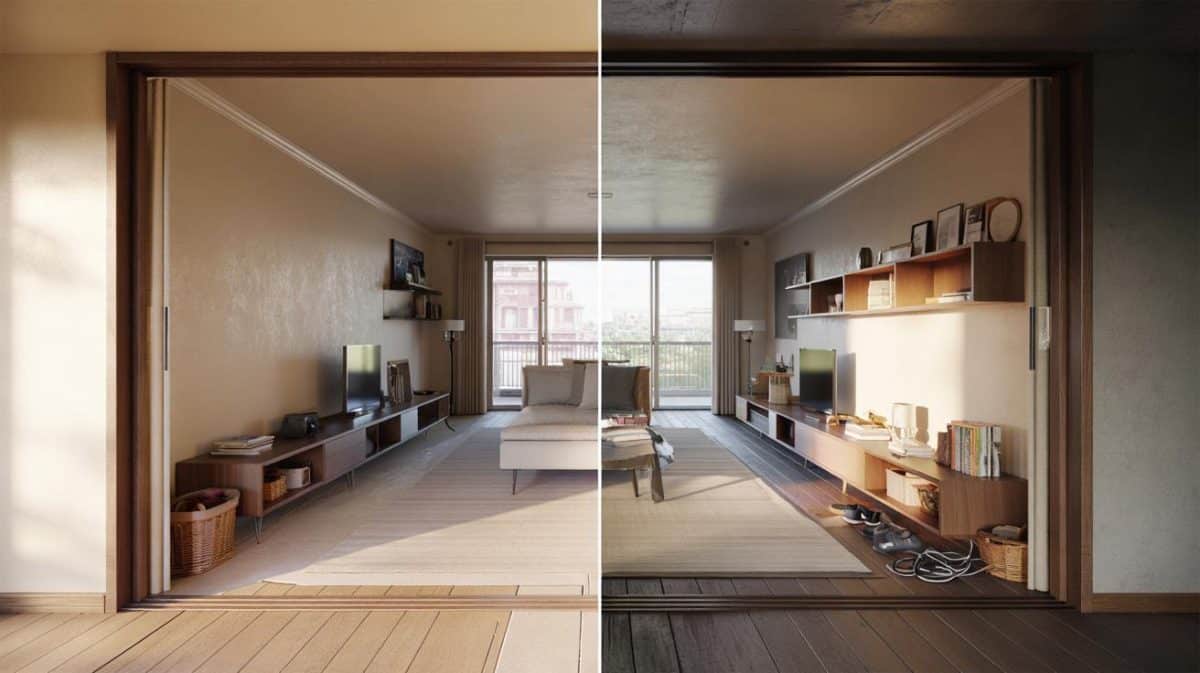
In the late afternoon, the café is full of people in work clothes, shoulders dropped, phones face down for once.
You can almost sort them into two tribes. Those who look crushed after “just a normal day”. And those surprisingly bright-eyed, calmly stirring their tea, as if routine had somehow recharged their batteries instead of draining them.
They all swear they did the same thing: commute, desk, emails, meetings, dinner, sleep. No wild drama, no last‑minute crisis, nothing social‑media worthy. Still, one group looks like they’ve run a marathon in wet concrete. The other gives off that quiet glow of someone who’s secretly won something.
So what really happens, on those plain, predictable days, that leaves some people mysteriously refreshed?
The answer hides in tiny choices you barely notice.
Why routine doesn’t drain everyone the same way
Watch any office at 9am and you can see it start. The “routine lovers” slide into their seats, open the same tools, sip the same drink, and their bodies seem to relax. Their day is like a familiar song they know by heart. That sense of predictability calms their nervous system before the first email even lands.
Next to them, someone else is already tense. Same desk, same tasks, totally different inner weather. For them, routine means being trapped. Each repeated action adds a thin layer of frustration. By noon, they’re exhausted not from the work itself, but from the quiet war in their head.
Same calendar. Opposite experience.
Take Emma, 34, project manager in Manchester. On paper, her weekdays look painfully ordinary: breakfast at 7:15, train at 7:42, inbox at 8:30, gym at 18:10, pasta at 19:30. Nothing dramatic. No miracle morning. No ice baths at dawn.
Yet when she talks about it, there’s a softness in her voice. “I like knowing what’s coming,” she says. “I don’t have to decide everything all the time. I just… follow the track I set for myself.” At work, she tackles one chunky task in the morning, one in the afternoon. No heroics. At home, same series, same candle, same stretching. She goes to bed before scrolling turns into doom.
Emma isn’t a productivity robot. She’s just turned her routine into a safe lane. Her brain spends less time firefighting, and more time quietly coasting.
Underneath, there’s a simple mechanism at play. Our brains crave two things that seem contradictory: novelty and safety. Chaotic days drown us in novelty and strip away safety. Static, resentful routines do the opposite: lots of safety, zero spark. People who feel refreshed after plain days usually hit a rare balance between the two.
➡️ Home wind turbines fail without consistent laminar flow
➡️ The “taxi smell” method: why fabric holds odor and how pros neutralize it
➡️ The subtle difference between feeling busy and feeling mentally engaged
➡️ How “record fish” are verified: what counts as proof beyond a photo and a tape measure
➡️ The centenarian who refuses assisted living: the habit she credits most (and it’s not diet)
➡️ Beekeeper land tax dispute: the weird definition that turns “helping” into “income”
➡️ Visible floor edges enlarge perceived space
➡️ The reason familiar sounds feel grounding during uncertainty
They use repetition not as a cage, but as scaffolding. Regular wake times, repeated routes, predictable meals — all that reduces “decision fatigue”, so their mental energy goes where it actually matters. *The boring bits carry them, instead of crushing them.*
At the same time, they thread in small pockets of change: a different podcast on the same commute, a slightly harder workout on the same mat, a new recipe on an old plate. Their nervous system stays calm, but not numb. That’s where the quiet energy comes from.
How to turn a standard day into something that actually restores you
Start with one tiny anchor in your day that never moves. Not a whole morning routine worthy of Instagram, just a single act that signals: “Here, I breathe.” It might be drinking your first coffee without your phone, or stepping outside for two minutes of actual daylight before touching your inbox.
People who end their “routine days” feeling clear often treat these anchors like non‑negotiables. Not in a rigid way, more like a promise to themselves. That small repetition tells your body, This part is safe. Over time, your nervous system starts to recognise the pattern and powers down into it, like a laptop finding the charger.
One anchor in the morning, one at night. That’s enough to change the flavour of a whole day.
Then look at your routine like a crowded drawer. Don’t add more. Remove what grinds you down. Many of us drag along tiny habits that silently drain us: checking work messages before we’ve even left bed, eating in front of a screen, saying yes to meetings that don’t need us. The day feels “normal”, yet your attention is shredded by 10am.
Soyons honnêtes : personne ne fait vraiment ça tous les jours. No one follows the perfect schedule we see in glossy TikToks. But trimming just one or two of those micro‑drains makes room for the kind of rest that hides inside repetition. That might mean batch-reading messages instead of grazing on them, or protecting 30 minutes of “no inputs” after work before you open any app.
The aim isn’t to become efficient. It’s to let your mind have fewer half‑open tabs.
“Routine is not the enemy of freedom,” says London-based psychologist Dr. Aisha Grant. “It’s the floor you stand on, so you can choose where to dance. People feel refreshed when their routine holds them, instead of them holding their routine together by sheer willpower.”
There are a few simple levers that quietly transform a standard day into a recharging one:
- Keep wake-up and bedtime roughly consistent, even on weekends.
- Do one focused thing at a time, especially for your hardest task.
- Insert short, genuinely offline moments between big chunks of the day.
- Drop at least one “obligation” that nobody actually asked you to keep.
- Protect one small thing you enjoy that has nothing to do with productivity.
These aren’t fancy hacks. They’re small acts of self-respect, repeated.
Living with routine without feeling trapped by it
Here’s the strange thing: people who feel most refreshed by their ordinary days aren’t the ones worshipping routine. They’re the ones in quiet conversation with it. They tweak it season by season. They let it loosen when life is heavy, and tighten when their brain needs a frame.
On social media, routine often looks like a static grid: perfect 5am alarms, colour-coded calendars, no messy days allowed. Real life is warmer and more forgiving. You oversleep, a train is cancelled, a child wakes up ill, the day derails. What sinks people isn’t the break in routine. It’s the story they tell themselves about it.
The people who still end the day refreshed often say something softer: “Ok, today was weird. Tomorrow, I’ll just pick up one small thing again.”
That’s the quiet power of a well-lived routine. It doesn’t demand that you “stick to the plan” no matter what. It offers you a familiar path you can return to whenever you’re ready. On days when the world feels loud, that path can feel like a deep exhale.
And maybe that’s why some people leave a completely average Tuesday feeling almost… lucky. Not because anything spectacular happened, but because the simple, repeated moves of their day lined up with what their body and brain can actually carry. The routine didn’t steal their energy. It secretly gave some back.
The next time you catch yourself saying, “Nothing special happened today,” it might be worth looking closer. Sometimes the most restorative days are the ones that never make it into a story — or maybe they’re exactly where a new one quietly begins.
| Point clé | Détail | Intérêt pour le lecteur |
|---|---|---|
| Routine as scaffolding | Using repeated actions as support rather than a cage | Helps you see everyday tasks as a source of stability, not boredom |
| Micro-anchors | One small, repeated ritual in the morning and evening | Gives your nervous system clear signals to switch on and wind down |
| Removing drains | Cutting tiny habits that quietly exhaust you | Frees mental space so “normal” days feel lighter and more refreshing |
FAQ :
- Why do routines relax some people and stress others?Because we don’t all read repetition the same way. For some, it signals safety and control; for others, it feels like being stuck. The trick is shaping routines you’ve chosen, not ones you feel forced into.
- Can a predictable day really be more restful than a lazy one?Yes. A “lazy” day scattered with random scrolling and low-level guilt often leaves your brain buzzing. A simple, predictable day with clear edges can be surprisingly soothing.
- What if my job is chaotic and I can’t control my schedule?You can still create tiny islands of predictability around it: same wake time, same pre‑work ritual, same way of closing the day. Even five minutes of repeatable calm matters.
- Do I need a full morning routine to feel refreshed?No. One small act done consistently beats a 12‑step routine you drop after a week. **Think “minimum viable ritual”, not total life overhaul.**
- How do I know if my routine is actually working for me?Check how you feel at the end of an ordinary day. If you’re mentally fried or resentful most nights, it’s a sign to adjust: simplify, cut drains, and add one thing that feels genuinely yours.